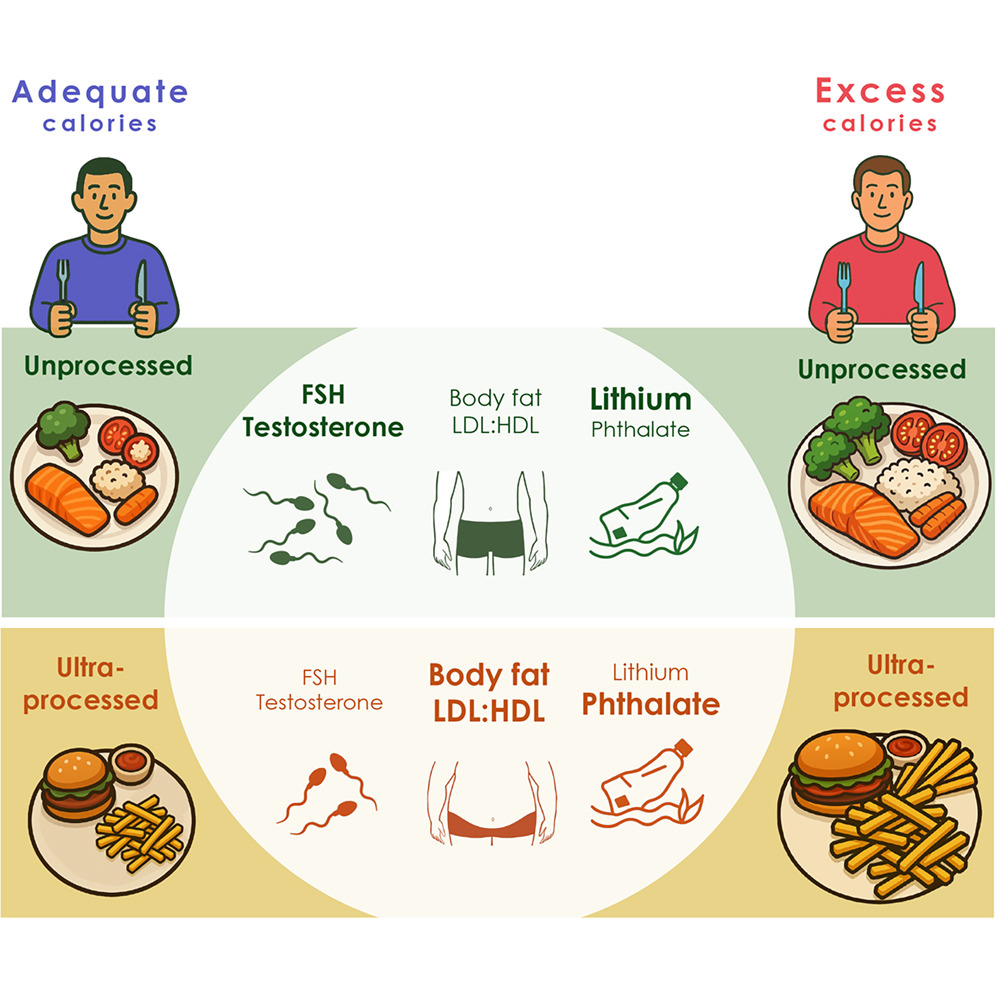
“An international team of scientists has reported that people gain more weight on an ultra-processed diet compared to a minimally processed diet, even when they eat the same number of calories. The study in humans also revealed that a diet high in ultra-processed foods introduces higher levels of pollutants known to affect sperm quality (Preston et al., 2025). The findings were published in the journal Cell Metabolism.”
“Our results prove that ultra-processed foods harm our reproductive and metabolic health, even if they’re not eaten in excess. This indicates that it is the processed nature of these foods that makes them harmful,” says Jessica Preston, lead author of the study, who carried out the research during her PhD at the University of Copenhagen’s NNF Center for Basic Metabolic Research (CBMR).” (University of Copenhagen, 2025; Preston et al., 2025)
Study Highlights
Compared with an unprocessed diet, a UPF (ultra-processed food) diet impaired cardiometabolic and reproductive health
The deleterious effects of a UPF (ultra-processed food) diet were independent of total caloric intake
A UPF diet altered the balance of several hormones, including GDF-15 (growth differentiation factor 15) and FSH (follicle-stimulating hormone)
A UPF diet was associated with higher serum concentration of the phthalate cxMINP
(Preston et al., 2025)
Same calories, different outcomes
“To get the best possible data, the scientists compared the health impact of unprocessed and ultra-processed diets on the same person. They recruited 43 men aged 20 to 35 [years old], who spent three weeks on each of the two diets, with three months ‘washout’ in between.
Half [of the men] started on the ultra-processed and half started on the unprocessed diet. Half of the men also received a high-calorie diet with an extra 500 daily calories, while half received the normal amount of calories for their size, age and physical activity levels. They were not told which diet they were on. Both the unprocessed and ultra-processed diets had the same amount of calories, protein, carbs and fats.
Men gained around 1 kg more of fat mass while on the ultra-processed diet compared to the unprocessed diet, regardless of whether they were on the normal or excess calorie diet. Several other markers of cardiovascular health were also affected.” (University of Copehhagen, 2025; Preston et al., 2025)
Ultra-processed foods are polluted with endocrine disruptors
“The scientists also discovered a worrying increase in the level of the hormone-disrupting [endocrine-disrupting] phthalate cxMINP, a substance used in plastics, in men on the ultra-processed diet. Men on this diet also saw decreases in their levels of testosterone and follicle-stimulating hormone, which are crucial for sperm production.
“We were shocked by how many body functions were disrupted by ultra-processed foods, even in healthy young men. The long-term implications are alarming and highlight the need to revise nutritional guidelines to better protect against chronic disease.” says the study’s senior author Professor Romain Barrès from the University of Copenhagen’s NNF Center for Basic Metabolic Research, and the Université Côte d’Azur.” (University of Copenhagen, 2025; Preston et al., 2025)
For more information on the potential negative health impacts of endocrine-disrupting chemicals on human health, see the in-depth report published by the Endocrine Society and the International Pollutants Elimination Network (IPEN) (2024).
Endocrine Disrupting Chemicals: Threats to Human Health. Pesticides, Plastics, Forever Chemicals, and Beyond (Endocrine Society and IPEN, February 2024)
The authors concluded that, “our results demonstrate that consumption of UPF itself, irrespective of excess caloric intake, is detrimental to human health. Moving dietary patterns away from UPF and toward less-processed alternatives may promote cardiometabolic and mental health, along with amelioration of male reproductive fitness.” (Preston et al., 2025)
“Green roofs can capture nearly all the microplastic particles that contaminate rainwater in modern cities, according to a new study. The findings add to the list of benefits of green roofs, which have previously been shown to reduce energy needed for heating and cooling buildings and calm the flow of stormwater. These nature-based solutions can offer unexpected co-benefits in mitigating airborne pollution in densely built environments,” says study team member Shuiping Cheng, a researcher at Tongji University in Shanghai, China.” (DeWeerdt, 2025; Huang et al., 2025)
Microplastics—small bits of material formed from the breakdown of everyday plastic products—are ubiquitous. They’re found in soil, water, air, and even our bodies, and it’s increasingly clear that they pose risks to the environment, wildlife, and human health.
Most efforts to capture microplastics in urban environments have focused on filtering them out of surface runoff in bioremediation ponds, swales, and constructed wetlands. Since green roofs are known to filter heavy metals and excess nutrients from runoff, Cheng and his colleagues wondered if they could take care of microplastics as well.” (DeWeerdt, 2025; Huang et al., 2025)
To assess is green roofs could capture microplastics, the researchers “built a simulated roof environment in their lab, where, in a thin layer of fresh soil, they planted two kinds of plants commonly used on rooftops in the city of Shanghai. They also introduced microplastic particles into the air above the plants at levels common to Shanghai. They then conducted simulated rains, measuring microplastic levels on the plants and in the soil.”
“They found that the plants did a good job of pulling the microplastics from the rain, and by extension, the air above them. The green roof system, including the soil layer, pulled approximately 97.5% of the microplastics from the rainwater that landed on it. And after conducting measurements over multiple rains, the team found that the percentage of microplastics removed increased slightly with rainfall intensity.”
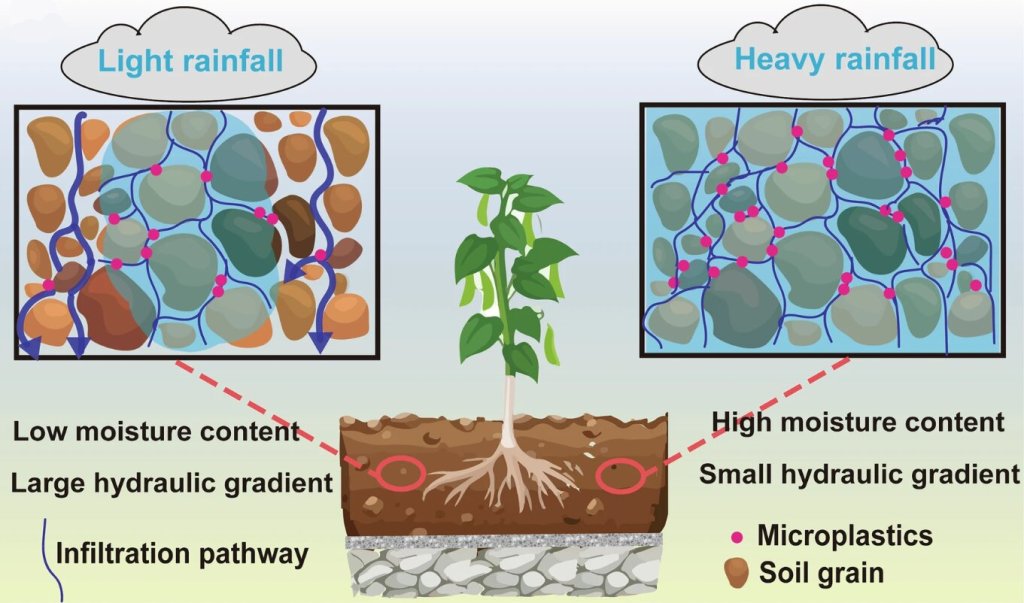
“The researchers note that while some microplastics were collected by the leaves, the bulk of the capture was in the soil. They also noted that microplastics shaped like fragments were collected by the soil better than those shaped like fibers.” (Yirka B, 2025; Huang et al., 2025) See Figure 1 below.
Figure 1. Schematic of the infiltration process affected by the proposed contributor. Specifically, the thick lines represent relatively larger preferential flow channels that exist under low soil moisture conditions, allowing for faster infiltration. In contrast, the thin lines correspond to finer channels formed due to soil swelling under higher moisture conditions, resulting in slower infiltration. Illustration credit: Huang et al. Communications Earth & Environment (2025). DOI: 10.1038/s43247-025-02407-w
Green roofs are not likely to be a “set it and forget it” solution to microplastics. For one thing, the soil could become saturated with microplastics over time. Earthworms might be able to be deployed to break down and metabolize the microplastic fragments, the researchers suggest.
“In addition, the filter and drainage layers of green roofs are sometimes made of plastic, which could become new sources of microplastic pollution themselves, the researchers warn. They buried pieces of polypropylene sheets in the soil of their model green roofs and observed signs of aging and degradation over the course of the experiment.” (DeWeerdt, 2025; Huang et al., 2025)
“A key next step is to validate these results under real-world conditions on full-scale green roofs,” Cheng says. “We are actively exploring opportunities to carry out such long-term field studies to better understand microplastic retention and release dynamics over time.” (DeWeerdt, 2025; Huang et al., 2025)
Huang, J., Bao, M., Wu, S. et al. Green roofs act as the first barrier to intercept microplastics from urban atmosphere. Commun Earth Environ. 2025;6:452.
During my trip to Ecuador in late June, I dined at Somos Restaurant, in Quito, Ecuador. The theme of Somos restaurant is “Ecuadorian Born, Globally Inspired.” Somos restaurant specializes in preparing locally-available, indigenous foods and advocates for sustainable gastronomy.
Here are some photos of the impressive restaurant, including the delicious dishes we sampled from the menu including the Pan de Yuca (warm cassava bread topped with aged cheese, served with guava chutney) as an appetizer. As a main course, I had the Cloiflor Andina (Cauliflower with Amazonian turmeric, lentil-miso puree, and tamarind chutney). We shared the Berenjena Asada (Eggplant on a smoky tomato sauce, macrambo tahini and crispy sourdough crumbs). Luckily our hotel room had a small refrigerator where we could store the leftovers from this delicious meal, until the next day.
Learn more about Sustainable Gastronomy from the UN Food and Agriculture Organization (FAO) at:
“It can also refer to a style of cooking from a particular region. In other words, gastronomy often refers to local food and cuisine. Sustainability is the idea that something (e.g. agriculture, fishing or even preparation of food) is done in a way that is not wasteful of our natural resources and can be continued into the future without being detrimental to our environment or health.
Sustainable gastronomy, therefore, means cuisine that takes into account where the ingredients are from, how the food is grown and how it gets to our markets and eventually to our plates.” (UN FAO, 2025)
Learn more about Somos Restaurant and the work of Founder and Chef Alejandra Espinoza, at:
Sustainable Gastronomy Day – June 18. United Nations (UN) Food and Agriculture Organization of the United Nations (FAO). June 18, 2025. Available at: https://www.fao.org/sustainable-gastronomy-day/en
Tearing off plastic wrap from the meat or prepackaged fruit and vegetables you purchased at the supermarket may contaminate your food with micro- and nanoplastics, according to a new research review published in the journal NPJ Science of Food.
“Plastic contamination may also occur when you’re unwrapping deli meat and cheese, steeping a tea bag in hot water, or opening cartons of milk or orange juice. Glass bottles and jars with a plastic-coated metal closure may also shed microscopic bits of plastic.” (LaMotte, 2025; Zimmermann et al., 2025)
“In fact, the abrasion from repeatedly opening and closing the caps on glass and plastic bottles can release an untold amount of micro- and nanoplastics into the beverage, said Dr. Lisa Zimmermann, lead author of the study published Tuesday in the journal NPJ Science of Food.” (LaMotte, 2025; Zimmermann et al., 2025)
Figure 1. Opening and closing plastic bottle caps can release microplastics into a drink, a new scientific review finds
“The research shows the number of microplastics increases with each bottle opening, so therefore we can say it’s the usage of the food contact article which leads to micro- and nanoplastic release,” said Zimmermann, scientific communication officer at the Food Packaging Forum, a nonprofit foundation based in Zurich, Switzerland, that studies chemicals in food contact materials.”
“Researchers have measured micro- and nanoplastics in such food and drink products as beer, canned fish, rice, mineral water, tea bags, table salts, take-out foods and soft drinks, according to the study.” (La Motte, 2025; Zimmermann et al., 2025)
“This is the first systematic evidence of how normal and intended use of foodstuffs packaged in plastics can be contaminated with micro- and nanoplastics,” Zimmermann said. “We found food packaging is actually a direct source of the micro- and nanoplastics measured in food.” (LaMotte, 2025)
“A separate investigation by the Food Packaging Forum published in September 2024 found more than 3,600 chemicals leach into consumer products during food manufacturing, processing, packaging and storage, ending up in the human body. (LaMotte, 2025; Geueke et al., 2025)
Seventy-nine of those food-processing chemicals are known to cause cancer, genetic mutations, endocrine and reproductive issues, and other health concerns, according to the September 2024 study.” (LaMotte, 2025; Symeonides et al., 2024)
“And while scientists have long known about potentially toxic chemicals from plastics leaching into food, “what’s less clear, and deeply concerning, is just how significant food packaging is as a source of exposure to plastic particles and what that means for our health,” said David Andrews, acting chief science officer at the Environmental Working Group, a Washington, DC-based health and environmental advocacy organization, in an email.”
“This new study highlights food packaging and processing equipment as potentially significant sources of microplastic contamination in the food we eat, and ultimately in our bodies,” said Andrews, who was not involved with the research. “This study should raise alarm bells.” (LaMotte, 2025)
What are micro- and nanoplastics?
“Microplastics are polymer fragments that can range from less than 0.2 inch (5 millimeters) down to 1/25,000th of an inch (1 micrometer). Anything smaller is a nanoplastic that must be measured in billionths of a meter.
At 1,000th the average width of a human hair, experts say nanoplastics are so teeny they can migrate through the tissues of the digestive tract or lungs into the bloodstream. As the blood circulates, the plastics may distribute potentially harmful synthetic chemicals throughout the body and into cells.
A flurry of recent studies have discovered microplastics and nanoplastics in human brain tissue, the testes and the penis, human blood, lung and liver tissues, urine and feces, mother’s milk, and the placenta.” (LaMotte, 2025)
“In the first analysis to illustrate harm to human health, a March 2024 study found people with microplastics or nanoplastics in their carotid artery tissues were twice as likely to have a heart attack or stroke or die from any cause over the next three years than people who had none.” (LaMotte, 2025; Marfella et al., 2024)
Actions that worsen microplastic shedding
The latest research searched thousands of studies to find those that did the best job of identifying and measuring plastics in tested foods before narrowing the list to 103 for the review.
Microplastic research is quite new, and studies so far often use different methods of microplastic identification and measurement. The lack of standard protocol can make it difficult to adequately compare findings, said senior study author Jane Muncke, managing director and chief scientific officer at the Food Packaging Forum. (LaMotte, 2025)
“The novel aspect of our analysis is we didn’t just collect all the studies, but we also examined the scientific reliability of their methods. We included a critical appraisal step,” Muncke said. “That left us with seven highly reliable studies — more high-quality research is definitely needed.” (LaMotte, 2025)
According to that research, ultraprocessed foods contain significantly more microplastics than minimally processed foods.
“There’s a higher number of manufacturing steps with ultraprocessed foods, which can increase the contact time with plastic food processing equipment,” Muncke said, “thus increasing the chance of micro- and nanoplastic migration.” (LaMotte, 2025)
“Migration into food also increased when the plastic packaging was heated, washed for reuse, exposed to sunlight and subjected to mechanical stress — such as the twist used to open a bottle cap, according to the review. That sort of repeated stress could lead to higher abrasion than opening a plastic container, so future research should consider how plastic is used as well as the types of plastics, Muncke said.” (LaMotte, 2025)
“This is a rigorous, detailed and critical study that applies robust systematic methods to review the existing literature on microplastics and food contact materials,” said Megan Deeney, a research fellow and doctoral student in plastics and global health at the London School of Hygiene & Tropical Medicine at the University of London, in an email.
“What is particularly important is that the authors take the time to extract and evaluate evidence on whether the presence of microplastics changed over time in these studies — this can help to identify the food contact material itself as a direct source of food contamination by microplastics,” said Deeney, who was not involved with the new research. (LaMotte, 2025; Zimmermann et al., 2025)
“One of the studies included in the new review found 1 liter of water — the equivalent of two standard-size bottled waters bought at the store — contained an average of 240,000 plastic particles from seven types of plastics, of which 90% were identified as nanoplastics and the rest were microplastics.” (LaMotte, 2025)
Another example involved melamine, which is used to make bowls, plates, cups and other plastic tableware.
“In one study, researchers washed a melamine bowl 10 times, 20 times, 50 times, 100 times and measured the amount of microplastic it released each time,” Zimmermann said. “Then they put something in the bowl and tested it and found more microplastic release after increased washing.” (LaMotte, 2025)
Limiting your exposure to plastic
While it’s not yet possible to clean microplastics from the food supply, there are steps one can take to reduce exposure to plastics and the chemicals they secrete.
“One is to reduce our plastic footprint by using stainless steel and glass containers, when possible,” said Dr. Leonardo Trasande, director of environmental pediatrics at NYU Langone Health, in an earlier interview with CNN.”
“Avoid microwaving food or beverages in plastic, including infant formula and pumped human milk, and don’t put plastic in the dishwasher, because the heat can cause chemicals to leach out,” Trasande said. (LaMotte, 2025)
“In addition, check the recycling code on the bottom of packaging to find the plastic type, and avoid plastics with recycling code 3, which typically contain phthalates, he added.”
“Bring reusable bags to the grocery store, suggests the Natural Resources Defense Council, a New York City-based environmental advocacy group. Invest in a zippered fabric bag and ask the dry cleaner to return your clothes in that instead of those thin sheets of plastic. Bring a travel mug to the local coffee store for takeout and silverware to the office, cutting back on plastic cups and utensils.” (LaMotte, 2025)
“However, due to the pervasiveness of microplastics in the environment, “this is not something that any individual can solve on their own,” Deeney said.
“We need systemic action to reduce plastics production and pollution,” she said via email, encouraging anyone concerned about the issue to send a message to their representatives. (LaMotte, 2025)
“There’s a critical opportunity for individuals to engage with governments to demand strong, ambitious action on plastics in the upcoming final round of negotiations for a Global Plastics Treaty in Geneva this August, where more than 175 countries will convene to determine a legally-binding instrument to end plastics pollution.” (LaMotte, 2025)
Zimmermann, L., Geueke, B., Parkinson, L.V. et al. Food contact articles as source of micro- and nanoplastics: a systematic evidence map. npj Science of Food. 2025;111(9): https://doi.org/10.1038/s41538-025-00470-3
Symeonides C, Aromataris E, Mulders Y, et al. An umbrella review of meta-analyses evaluating associations between human health and exposure to major classes of plastic-associated chemicals. Annals of Global Health. 2024; 90(1): 52, 1–54. DOI: https://doi.org/10.5334 /aogh.4459
Geueke, B., Parkinson, L.V., Groh, K.J. et al. Evidence for widespread human exposure to food contact chemicals. J Expo Sci Environ Epidemiol 2025;35;330–341. https://doi.org/10.1038/s41370-024-00718-2
Marfella R, Prattichizzo F, Sardu C, et al. Microplastics and nanoplastics in atheromas and cardiovascular events. N Engl J Med. 2024;390(10):900-910. doi: 10.1056/NEJMoa2309822
The story of açaí begins in the depths of the Amazon rainforest, where local tribes regarded it as a precious source of energy and vitality. It’s no coincidence that the name “açaí” means “fruit that cries” in the Tupi language, referring to how the pulp flows from the fruit.
For generations, Amazonian communities have harvested these small purple berries from the elegant Euterpe oleracea palms, developing traditional harvesting and preparation techniques that continue to this day. (La Caí, 2025)
Today, acai (ah-sigh-EE) berries are grown in the rainforests of South America including Brazil, Colombia, Bolivia and Peru.
From Traditional Food to Global Recognition
The transformation of this small berry from a traditional Amazonian food to a globally recognized superfood is a fascinating story of discovery and innovation. In the 1990s, Brazilian researchers began scientifically studying its exceptional nutritional properties.
This scientific recognition for this small berry coincided with growing interest in superfoods in Western countries. From professional athletes to nutrition experts, more and more people began incorporating açaí into their diet, contributing to its growing popularity. (La Caí, 2025)
The global acai berry products market is estimated to grow by 1.26 billion dollars from 2025-2029, according to Technavio. (PR Newswire, January 25, 2025)
The Acai Berry in Colombia: Using Agroforestry to Promote Sustainability
After more than 50 years of war, the peace agreement signed in Colombia in 2016 represents new opportunities for growth for Colombia. However, Colombia still faces significant social and environmental challenges, especially in the region most affected by the armed conflict, such as Putumayo.
One of the main socio-environmental problems facing these areas is the loss of forest cover due to the lack of sustainable alternatives. The main factors driving deforestation are extensive livestock farming, and the illegal and indiscriminate logging of forests, either for timber sales or for converting them into plots for illicit crops.
Through the açaí and other Amazonian fruits value chain, Amapuri and its farmer cooperative, CorpoCampo, promote forest protection and soil restoration through the establishment of agroforestry crops in Colombia. In this way, they contribute to conservation and the construction of territorial peace.
The Unique Nutritional Profile of Acai
Açaí stands out for its exceptional nutritional profile, making it one of the most nutrient-dense fruits in the world. An in-depth analysis reveals a unique combination of essential nutrients:
Antioxidants: Açaí contains 10 times more anthocyanins than blueberries, these powerful antioxidants are responsible for its intense purple color.
Essential Fatty Acids: Rich in omega-3, 6, and 9, similar to those found in olive oil.
Fiber: 4.5g of fiber per 100g, contributing to healthy digestion and satiety.
Plant-based Protein: A complete amino acid profile, rare for a fruit.
Exceptional Antioxidant Profile
Studies conducted by the University of São Paulo have shown that this small but mighty acai berry has an antioxidant capacity (ORAC) of 102,700 units per 100g, significantly higher than most fruits. This antioxidant power comes primarily from:
Anthocyanins: responsible for the purple color and anti-inflammatory properties
Flavonoids: contribute to cardiovascular protection
Polyphenols: support cellular health
A recent review of the literature published in Nutrients by Laurindo et al. (2023) concluded that:
“[A]çaí has medicinal properties and the economic potential for widespread use throughout the food and cosmetic industry. The fruit presents a rich phytochemical profile composed of phenolic compounds, quinones, terpenes, and norisoprenoids, all of which are related to its health-promoting and disease-preventing potential.
In vitro and in vitro studies demonstrated that açaí possesses antioxidant and anti-inflammatory effects; exerts cardioprotective, gastroprotective, hepatoprotective, neuroprotective, and renoprotective activities; improves hyperinsulinemia and dyslipidemia; and shows antineoplastic actions.
Additionally, açaí exerts antimicrobial and antiparasitic effects. Clinical trials have demonstrated that açaí protects against prostate cancer, MetS risk factors, and auditory dysfunctions. Moreover, its derivatives, such as berry extracts, whole fruit extracts, seed extracts, and phytochemically enriched extracts, have no hepatotoxicity, cardiotoxicity, or nephrotoxicity, strengthening its safety and health potential.” (Laurindo et al., 2023)
Recipes: Enjoying the Acai Berry
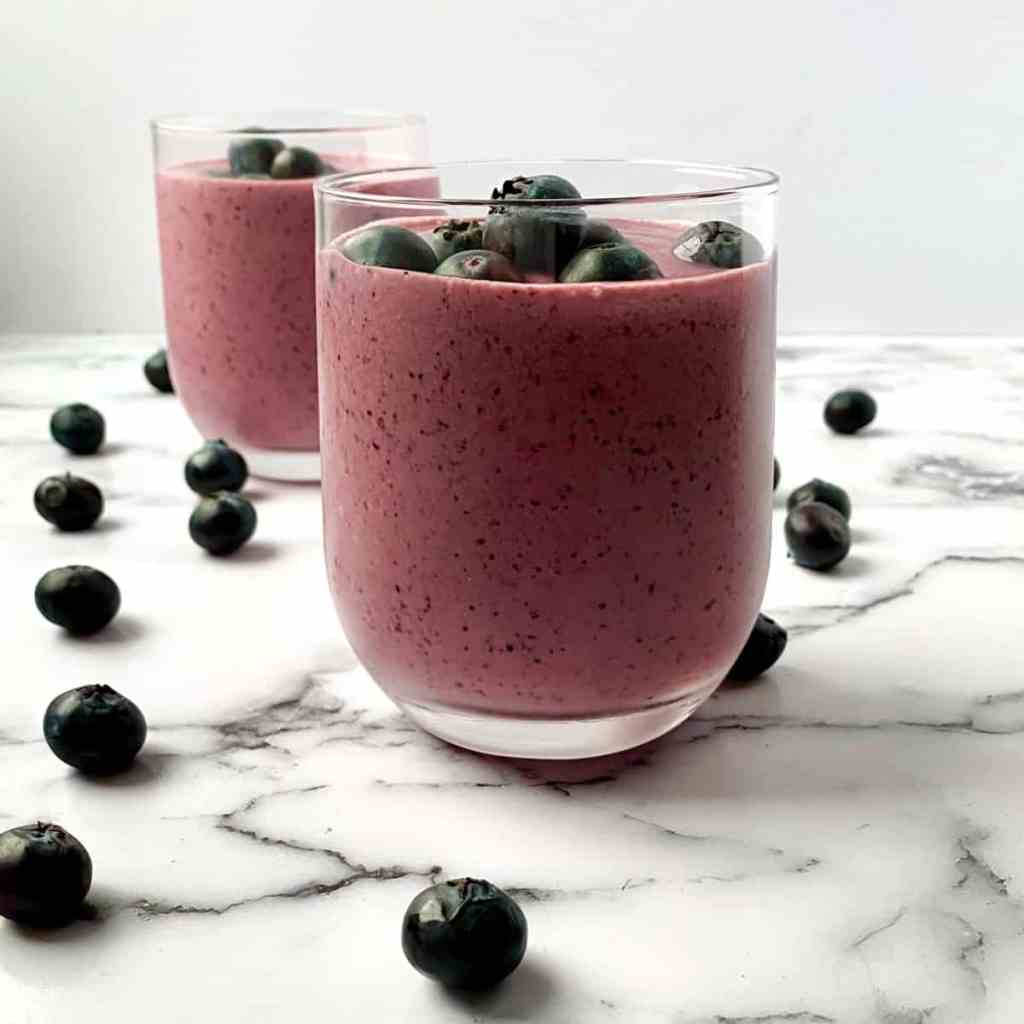
Here are a few recipes to try using either acai pulp (frozen) or acai powder, whichever you prefer or can find where you live.
Acaí Smoothie
Ingredients 1 cup strawberries or 1 banana 1/2 cup fresh spinach 1 tablespoon açaí powder or 1/3 cup acaí pulp (frozen) 1 cup milk (cow’s milk or unsweetened plant-based milk) 1 teaspoon honey or agave (optional)
Instructions Place all the ingredients in a blender. Blend until smooth. Serve and enjoy a refreshing smoothie!
Chia and Acaí Pudding
Ingredients 1 cup unsweetened almond milk (or other milk of your choice) 3 tablespoons chia seeds 1 tablespoon acaí powder 1 teaspoon vanilla extract Honey, maple syrup, or agave to taste
Instructions In a bowl, mix the almond milk, chia seeds, acaí powder, and vanilla extract. Sweeten with honey, maple syrup, or agave to taste. Cover the bowl and refrigerate for at least 4 hours or overnight.
CorpoCampo – Sustainable Native Forest. Promoting sustainable livelihoods for the Colombian Amazon. Available at: https://corpocampo.org/
Laurindo LF, Barbalho SM, Araújo AC, et al. Açaí (Euterpe oleracea Mart.) in health and disease: A critical review. Nutrients. 2023;16;15(4): 989. doi: 10.3390/nu15040989.
In a new study published in the American Journal of Preventive Medicine (Nilson et al., 2025), researchers reported “a linear dose-response association between the ultra-processed food consumption and all-cause mortality” when they examined official surveys previously undertaken in the United Kingdom (UK) and US, as well as Australia, Brazil, Canada, Colombia, Chile and Mexico. (Nilson et al., 2025;Campbell, 2025)
The researchers conducted a meta-analysis to assess the dose-dependent relationship between UPF [ultra-processed food] consumption and all-cause mortality. “All-cause premature death rates among adults were estimated in eight countries with relatively low (Colombia and Brazil), intermediate (Chile and Mexico), and high (Australia, Canada, the United Kingdom, and the U.S) UPF consumption.” (Nilson et al., 2025;Bose, 2025)
Findings
A total of 239,982 participants and 14,779 deaths were considered for the dose-response meta-analysis that examined the association between the dietary share of ultra-processed foods and all-cause mortality. The pooled relative risk (RR) for a 10% increase in UPF on total energy intake was estimated to be 1.027.
A wide range of Population attributable fractions (PAFs) was observed in the selected countries based on their average ultra- processed food consumption. For example, Colombia, which reported lower ultra-processed food consumption, was associated with 3.9% PAFs, whereas the U.K. and U.S. reported higher PAFs at 14%.
The absolute number of premature deaths every year attributed to ultra-processed food consumption was between approximately 2,000 people in Chile and 124,000 individuals in the U.S. (Nilson et al., 2025; Bose, 2025)
Furthermore, these researchers noted that, “[w]hile 4%, 5% and 6% of premature deaths in Colombia, Brazil and Chile respectively are “attributable to UPF consumption,” the equivalent percentage is 10.9% in Canada, 13.7% in the US and 13.8% in England – the highest proportion among the eight countries.
“Premature deaths attributable to consumptions of ultra-processed foods increase significantly according to their share in individuals’ total energy intake. A high amount of UPF [ultra-processed food] intake can significantly affect health,” the researchers concluded. (Nilson et al., 2025; Campbell, 2025)
Death rates are highest in the countries where the population gets the largest amounts of total energy from eating UPF. In England that is 53.4%, according to the National Diet and Nutrition Survey undertaken in 2018-19. But it is even higher in the US – 54.5%.
The authors “first estimated a linear association between the dietary share of UPFs and all-cause mortality, so that each 10% increase in the participation of UPFs in the diet increases the risk of death from all causes by 3%,” said Eduardo Augusto Fernandes Nilson, the lead investigator of the study, from the Oswaldo Cruz Foundation in Brazil. While the burden of ill-health from UPF is highest in high-income countries, he noted that consumption of UPFs is growing in low- and middle-income nations. (Nilson et al., 2025; Campbell, 2025)
Stephen Burgess, a statistician in the MRC Biostatistics Unit at the UK’s University of Cambridge, said that while the study cannot prove the consumption of ultra-processed foods is harmful, “it does provide evidence linking consumption with poorer health outcomes.” (LaMotte, 2025)
“It is possible that the true causal risk factor is not ultra-processed foods, but a related risk factor such as better physical fitness — and ultra-processed foods is simply an innocent bystander,” said Burgess, who was not involved in the study, in a statement. “But, when we see these associations replicated across many countries and cultures, it raises suspicion that ultra-processed foods may be more than a bystander.” (LaMotte, 2025)
Conclusions
In conclusion, the findings of this recent research add to the growing body of evidence that links ultra- processed foods to a higher risk of both specific illnesses, and an increased risk overall of dying before age 75 (Campbell, 2025; Nilson et al., 2025) In the current study, the researchers reported a linear dose-response association between UPF consumption and all-cause mortality. Each 10% increase in UPF consumption corresponded to a 2.7% increased risk of all-cause mortality (Nilson et al., 2025;Bose, 2025).
Based on these results, the authors of this new study urge governments worldwide to introduce bold measures to reduce consumption of ultra-processed foods, including enhanced regulations of food marketing, and improved regulations on the sale of ultra-processed foods in schools and workplaces. The authors also recommend using fiscal policy, including taxes on ultra-processed food products, to reduce sales. (Nilson et al., 2025)
In a recent commentary published in the journal Brain Medicine, three medical doctors (MDs) identified dietary and lifestyle-based strategies that may reduce human exposure to microplastics and nanoplastics (MNPs). This commentary was published shortly after a research study published in Nature Medicine reported that the human brain contains “approximately a spoon’s worth of microplastics and nanoplastics (MNPs).” (Fabiano et al., 2025; Nihart et al., 2025).
Exposure to microplastics and nanoplastics: Potential impact on human health
Microplastics and nanoplastics (MNPs) are ubiquitous in the environment, with current estimates indicating that 10-40 million tons are released into nature every year. Following their emission from numerous sources, wind and water can transport MNPs to contaminate food, water, and air, which can then reach humans through various routes. (Bose, 2025; Fabiano et al., 2025)
Previous in vivo and in vitro studies have demonstrated that microplastics and nanoplastics (MNP) exposure leads to adverse health outcomes through inflammation, oxidative stress, altered biochemical/energy metabolism, immune dysfunction, impaired cell proliferation, carcinogenicity, disrupted metabolic pathways, and abnormal organ development.
Micoplastics and nanoplastics (MNP) exposure may also directly or indirectly impact various organs, including cardiovascular, nervous, hepatic, immune, gastrointestinal, respiratory, renal, muscular, reproductive, and endocrine systems. For example, several in vivo studies have confirmed that microplastic accumulation in the brain causes learning and memory deficits, neuroinflammation, and lower levels of synaptic proteins. (Bose, 2025; Fabiano et al., 2025)
Can microplastics and nanoplastics enter the brain?
A recent Nature Medicine study (Nihart et al., 2025) reported that human brains may contain a significant amount of MNPs, with dementia patients exhibiting three—to five-fold greater microplastics and nanoplastics (MNP) accumulation as compared to healthy controls. These brain tissues were found to be more susceptible to MNPs, with an accumulation rate seven to thirty times greater than that of other organs like the liver and kidneys.
In this study, microplastics isolated from human brains were less than 200 nanometers (nm) in size, most of which originated from polyethylene materials. A 50% increase in MNP concentration was observed in the brains of humans who died in 2024 as compared to 2016, which reflects rising environmental MNP levels over the past 50 years.
It remains unclear whether dementia weakens the blood-brain barrier (BBB), thereby allowing more microplastics to enter the brain. Additional research is also needed to determine whether, after entering the brain, MNPs induce microinflammation that prevents the brain from efficiently clearing proteins that could aggravate neurodegeneration. (Bose, 2025; Fabiano et al., 2025)
Sources of microplastics and nanoplastics (MNPs) exposure
Food and drink
Despite widespread contamination of microplastics and nanoplastics (MNPs) in the environment, various strategies can be implemented to reduce the risk of MNP exposure. For example, replacing bottled water with tap water could significantly reduce microplastic exposure from 90,000 to 4,000 particles every year.
Seafood, alcohol, and highly processed foods are other common dietary sources of microplastics and nanoplastics (MNPs). For example, a recent study highlighted that chicken nuggets contain 30 times more microplastics per gram than chicken breasts. Thus, reducing the consumption of these food products may reduce microplastics and nanoplastics (MNP) exposure levels. (Bose, 2025; Fabiano et al., 2025)
One randomized controlled trial (RCT) that looked at depression outcomes showed that eliminating 21.76 servings/week of highly processed foods (often stored in plastics) had a reduction in depression > 1 effect size (Jacka et al., 2017). This study concluded that the reduction in depression was due to adherence to a more Mediterranean-style diet. However, as observed by Fabiano et al. (2025), it is possible that the diet also lowered microplastic intake, contributing to improved brain health, although this factor was not directly examined in this study. (Kwon et al., 2020)
Avoiding the use of tea bags (made with plastic) and plastic food storage containers may also help prevent MNP exposure. For a detailed list of microplastic-free tea bag options, see the information provided below from Green Choice Lifestyle:
26 Plastic-Free Tea Bag Brands Without Microplastics in 2025
Canned food products also serve as potential sources of microplastics and nanoplastics (MNPs), as demonstrated by a recent study reporting an over 1,000% rise in urinary bisphenol A (BPA) levels after five days of daily canned food consumption. (Bose, 2025; Fabiano et al., 2025) This finding “suggests that limiting canned food consumption and opting for non-plastic or BPA-free packaged alternatives can effectively reduce exposure. These BPA spikes’ duration and health impact remain unclear, warranting futher research.” (Fabiano et al., 2025)
Another effective strategy to reduce microplastic consumption could be avoiding heating food in plastic containers. Heating food in plastic containers, particularly in the microwave, may release up to 2.11 billion MNPs between for every square centimeter in just three minutes. Thus, replacing plastic with glass or stainless-steel containers could reduce MNP intake. (Bose, 2025; Fabiano et al., 2025)
Environmental factors
Current estimates indicate that male adults inhale over 62,000 particles each year, demonstrating inhalation’s significant role as a route of MNP exposure. Thus, the use of a high-efficiency particulate air (HEPA) filter capable of removing up to 99.97% of airborne particles as small as 0.3 μm may protect individuals from inhaling airborne microplastics. Importantly, additional research is needed to quantify the health benefits of HEPA filters in preventing MNP exposure in humans. (Bose, 2025; Fabiano et al., 2025)
Can microplastics and nanoplastics (MNPs) be eliminated from the body?
Existing evidence suggests that the human body is equipped with certain mechanisms to remove MNPs from the body. For example, one study found that 16 of 20 study participants had detectable levels of BPA in their sweat, which indicates that sweating could facilitate the removal of BPA and other plastic-derived compounds from the body.
It remains unclear whether sweating effectively reduces microplastic concentrations in the body. Additional studies are also needed to identify other potential approaches to supporting the elimination of MNPs from the body. (Bose, 2025; Fabiano et al., 2025)
For more information on how to limit microplastics in your daily life, see these helpful tips from Dr. Tracey Woodruff, PhD, MPH, Professor of Obstetrics and Gynecology and Reproductive Sciences, at the University of California, San Francisco, PhD, MPH. Dr. Woodruff has researched how synthetic chemicals that surround us in modern life may make us sick, such as those synthetic chemicals found in microplastics.
How do you try to avoid microplastics and other toxins in your family’s food?
I don’t microwave in plastic. Years ago, I put my kids’ plastic baby bottles in the microwave to warm up milk because I, like so many people, just thought everything I bought at the store was safe for all uses. Now, because of my research, I would never do that. Heat makes plastic release harmful chemicals like BPA so I always microwave in ceramic or glass – that’s a really easy one. Still, it just goes to show that the burden shouldn’t be on me as the consumer to figure out if products can be toxic.
I have a glass water bottle to avoid buying plastic water bottles. Steel water bottles are also a good choice.
I buy organic as much as possible to reduce our exposure to pesticides. We live in the Bay Area, so it’s fortunate that we can shop at farmers’ markets but not everyone can. That just, again, shows we need to have ways to encourage that everyone has access to healthy food options.
I don’t eat a lot of red meat. Many chemicals like to hang out in fatty food, so reducing your red meat intake is also a good way to reduce chemical exposures. There’s an added climate benefit too because eating a more plant-based diet has a lower carbon footprint – and can lower your blood pressure and cholesterol.
At home, we try to eat lower on the food chain in general, more grains, fruits, vegetables, because many toxic chemicals tend to accumulate in animals higher up in the food chain as those animals eat other animals or plants.
Did you trash all of your plastic food containers?
No. We have a mix of plastic and glass, and we try to store in glass when possible. I’ve talked to people who got rid of all their non-stick pans in one day. For most of us, it’s more realistic to replace things over time.
And of course, if you have small kids, it’s pretty difficult to get rid of plastic because that’s what you use to prevent accidents.
What are some non-toxic cleaning tips?
At home, we use baking soda and water or vinegar and water to clean – those perform equally as well as products you’d buy on the market. A good recipe is one part vinegar to one part water – just don’t mix it with chemical cleaners, like bleach, which can create deadly chlorine gas.
If you still want to buy cleaning products, you can look for products designated by the Environmental Protection Agency through their Safer Choice program. We also make sure that our vacuum has a HEPA filter to control dust.
How has your work influenced your community involvement?
I’ve learned that it’s really important to be engaged in holding the government accountable for these exposures because, for so many of them, you or I can’t do anything about them – only the government can regulate chemicals that make their way into our water, food and products we wear and put on our bodies. We should be able to go into a store and purchase an item and know that the government has made sure it’s safe for us and our families. The burden can’t be on consumers to navigate all of this. That’s why I also register to vote – that’s the other thing I do consistently.
Finally, be sure to learn more about the Global Plastics Treaty via the links included below:
Jacka FN, O’Neil A, Opie R, et al. A randomised controlled trial of dietary improvement for adults with major depression (the ‘SMILES’ trial). BMC Medicine. 2017;15(1):23. doi: 10.1186/s12916-017-0791-y.
Kwon J-H, Kim J-W, Pham TD, et al. Microplastics in Food: A review on analytical methods and challenges. Int J Environ Res Public Health. 2020;17(1):6710. doi: 10.3390/ijerph17186710.
Nihart, A.J., Garcia, M.A., El Hayek, E. et al. Bioaccumulation of microplastics in decedent human brains. Nature Medicine. 2025;31:1114–1119. https://doi.org/10.1038/s41591-024-03453-1
Winiarska E, Jutel M, Zemelka-Wiacek M. The potential impact of nano- and microplastics on human health: Understanding human health risks. Environmental Research. 2024;251(Pt 2):118535. doi: 10.1016/j.envres.2024.118535
A new research study published in the journal Appetite has found that carbon food labels can encourage consumers to switch from animal-based to plant-based foods. Globally, there is increasing interest in carbon food labelling, given its potential to nudge consumers towards more sustainable food choices.
Carbon Food Labeling: Closing The Knowledge Gap
Previous research has shown that consumers consistently underestimate the vast difference in greenhouse gas emissions between animal- and plant-based foods. For instance, producing one kilogram of beef emits 60kg of greenhouse gases, whereas producing the same quantity of peas emits just 1kg of greenhouse gases. However, most people think the gap between the two is much smaller.
This matters because collectively, our food choices have a big impact on climate change. Agriculture generates almost a third of global greenhouse gas emissions, with animal products being the biggest contributors. (Li, 2025; Cadario et al., 2025)
Making carbon labels more informative
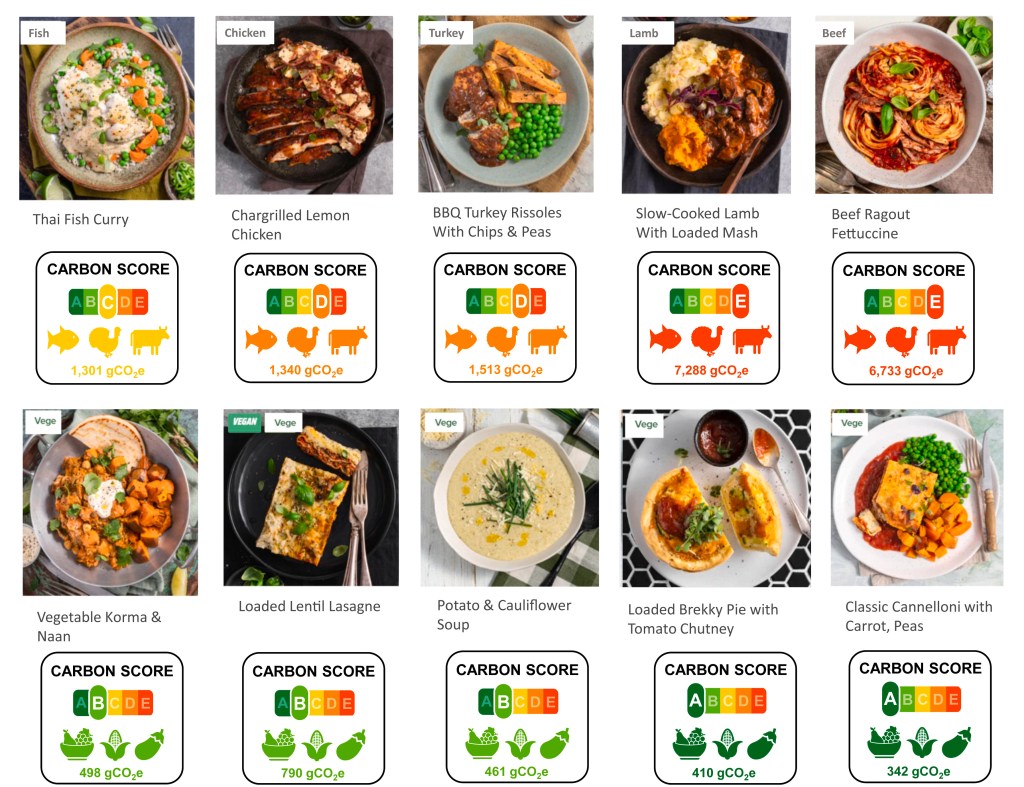
A “carbon footprint” refers to the greenhouse gas emissions associated with a product. Most carbon labels follow a similar approach. They typically display a number representing greenhouse gas emissions, and a traffic-light system indicating the level of environmental impact from green (low) to red (high). But such labels do not indicate whether the food is animal- or plant-based. Hence, in this case, a high carbon score does not help consumers identify the source of the emissions. (Li, 2025; Cadario et al., 2025) See Figure 1 to view food carbon labels used elsewhere compared to the food carbon label used in the current study (the one on the far right).
Figure 1. The food carbon label maps the carbon footprint to the source of the food, whether plant or animal, along with information about the greenhouse gas emissions. (Cadario et al., 2025)
Cadario and colleagues designed a new type of label. It clearly displays whether the food is sourced mainly from animals or plants, along with the standard emissions score and traffic-light color code. This approach is especially useful for the growing segment of pre-prepared and packaged foods such as soups and other ready-to-eat meals, which often contain a mix of meat and plant-based food.
The new carbon food label used in this study (Cadario et al., 2025) creates a mental link between a food source and its carbon impact. When a consumer sees high carbon scores on food labels and red traffic lights appearing more frequently on meat and other animal products, they begin to make the connection between those products and higher emissions. This is key to addressing a lack of knowledge around food carbon emissions.
These researchers tested their carbon food label against existing labels in a series of experiments with 1,817 everyday consumers from Australia, the United States and the Netherlands. (Li, 2025; Cadario et al., 2025)
One experiment involved soup. Compared with the group exposed to the standard carbon label, the group exposed to the new carbon food label learned to associate animal-based soups with higher greenhouse gas emissions more effectively. The participants were more accurate at estimating the greenhouse gas emissions of a second batch of soups without labels.
This improved knowledge also translates to more climate-friendly food choices. In another experiment with Australian consumers, the researchers encouraged participants to choose five meals from ten options. Five were animal-based and five were plant-based. Half the participants saw the meal options with the carbon labels, and the other half did not see the carbon labels. The group exposed to the carbon labels chose fewer animal-based options in their weekly meal plan. See Figure 2 below for the different carbon labels that were presented to participants.
Figure 2. Providing information about the source of the food, whether plant or animal, influenced choices of meal plans.(Cadario et al., 2025)
In the final experiment conducted in the Netherlands, displaying the carbon label made university students more likely to choose the plant-based snack option rather than the animal-based option. (Li, 2025; Cadario et al., 2025)
What these results mean for consumers and businesses
A simple change to food labels may help consumers make more informed environmental choices. For businesses and policymakers, it shows displaying only carbon numbers isn’t enough – the food source is crucial.
Some forward-thinking restaurants and food companies are already experimenting with adding carbon labels to the menu to encourage diners to choose climate-friendly dishes. These study results suggest such an approach could be more effective when combined with these new carbon labels. (Li, 2025; Cadario et al., 2025)
References:
Cadario R, Li Y, Klesse A-K. Bridging the knowledge gap: Mapping carbon emissions to food items facilitates choices of plant-based over animal-based Items. Appetite. 2025;107910.
An informative and timely new editorial has been published in Nutrition & Dietetics (February 2025). The editorial is titled “A new approach to nutrition science is needed to address current food systems challenges” (Machado, 2025). Here, the author notes that:
“Promoting healthy and sustainable food systems for current and future generations is central in realising United Nations’ 2030 Sustainable Development Goals.1 There is expert consensus on the urgent need to address current unhealthy, unsustainable and unequitable food systems, as evidenced by over 100 global reports.44 Such action is also the first of six ‘pillars of action’ in the United Nations’ Decade of Action on Nutrition (2016–2025).1 Yet progress towards achieving this agenda has been slow. Current predominant nutrient-centric and biomedical paradigms underpinning nutrition science research, policy and practice no longer can address the complexity of contemporary food and nutrition challenges.45, 46 Responding to intertwined health, sustainability and equity issues requires a novel approach to nutrition science47–49 that: (i) acknowledges the shift in modern nutrition science from a reductionist approach to a holistic one, addressing the complexities that arise as nutrition exposures move from nutrients to foods to dietary patterns, within the ‘Food System Sustainability’ era. This also means that new methods are required to generate, synthesize and evaluate the body of nutrition evidence; (ii) considers power asymmetries in food systems and the role of UPFs in driving nutrition transition globally; and finally, (iii) integrates biological, environmental and social sciences, and culture- and context-specific, non-formal knowledge, including Indigenous knowledge.”
You can access the full editorial published in Nutrition & Dietetics at:
A new approach to nutrition science is needed to address current food systems challenges (2025)
Machado P. A new approach to nutrition science is needed to address current food systems challenges (2025). Nutrition & Dietetics. 2025;82(1): https://doi.org/10.1111/1747-0080.12923
February 10, 2025 is World Pulses Day 2025. The theme for World Pulses Day 2025 is, “Pulses: Bringing diversity to agrifood systems.”
Pulses bring diversity to our agrifood systems in multiple ways: on the farm, in our diets and through value-added products. They boost biodiversity on farms by enriching cropping systems with more species. With more than 100 types of pulses available, farmers have many options for crop rotations and/or intercropping. Consumers can enjoy pulses as part of healthy diets. They are an affordable, protein-rich food source (19–25 percent protein), packed with essential minerals, high in fiber, and low in fat. These edible seeds are highly versatile and can be processed into different products, such as flour for making bread and pasta, or even protein drinks. That means they provide a range of income opportunities.
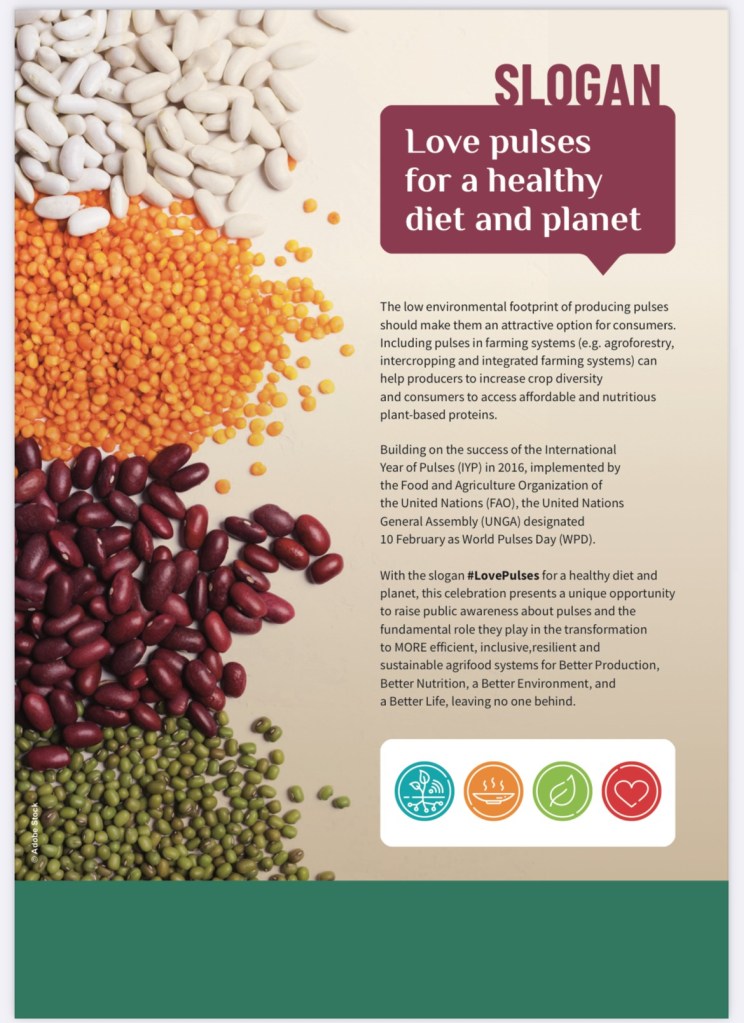
Be sure to see this excellent resource from the UN FAO titled: A Guide to World Pulses Day 2025:
World Pulses Day presents a unique opportunity to raise public awareness about pulses and the fundamental role they play in the transformation to more efficient, inclusive, resilient and sustainable agrifood systems. Pulses are essential to increase diversity of agrifood systems and consequently improve their resilience. This “get started” guide highlights the theme for the Day in 2025: “Pulses: Bringing diversity to agrifood systems”, as well as key actions that everyone can take to celebrate the World Pulses Day. Building on the success of the International Year of Pulses in 2016, which was implemented by FAO, the United Nations General Assembly designated 10 February as World Pulses Day.
If you are looking for recipes to enjoy pulses during your meals, see this great resource from Chefs and the UN Food and Agriculture Organization (FAO) where well-known Chefs share some of their favorite pulses recipes:
Pulses: nutritious seeds for a sustainable future(UN FAO, 2016)












 Sustainable RDN