Given the numerous positive attributes of edible insects, including a low environmental footprint, high food conversion ratio, rapid growth and nutritional values, a new review published in the journal Scientific Reports (2024) argues that consuming edible insects can play a vital role in promoting a more sustainable food system. Omuse et al. 2024 compiled and analyzed the fragmented database on edible insects and identified potential drivers that elucidate insect consumption, globally, focusing on promoting a sustainable food system.
These authors identified 2205 insect species, consumed across 128 countries globally. Among continents, Asia has the highest number of edible insects (932 species), followed by North America (mainly Mexico) and Africa. The countries with the highest consumption of insects are Mexico (450 species), Thailand (272 species), India (262 species), DRC (255 species), China (235 species), Brazil (140 species), Japan (123 species), and Cameroon (100 species). (Omuse et al, 2024)
Their study also revealed some common and specific practices related to edible insect access and utilization among countries and regions. They noted that, “Although insect consumption is often rooted in cultural practices, it exhibits correlations with land cover, the geographical presence of potentially edible insects, the size of a country’s population, and income levels.” They further point out that “The practice of eating insects is linked to the culture of people in Africa, Asia, and Latin America, while increased consciousness and the need for food sustainability are driving most of the European countries to evaluate eating insects. Therefore, edible insects are becoming an increasingly significant part of the future of planetary food systems.” And because of this, “more proactive efforts are required to promote them for their effective contribution to achieving sustainable food production.” (Omuse et al., 2024)
Scientists also believe that humans consuming insects for nutrition, or the practice of entomophagy, may play a role in enhancing global food security. The practice of entomophagy –has increased in popularity across the globe in recent years. Insect consumption is highest in tropical countries, where warmer climates help insects thrive, as well as in countries that face food scarcity. For example, crickets provide high nutritional content and have a low environmental impact, which makes them great allies in the fight against climate change. (Jansen, 2023)
Crickets are rich in macronutrients (i.e., protein, fat, carbohydrates) and micronutrients (i.e., vitamins and minerals). Protein from crickets has been reported to be as high as 62 to 71 grams per 100 grams of dry weight versus animal livestock at 27 grams per 100 grams of dry weight. In addition to the high protein content, crickets are also high in vitamins A, B, C, D, E, and K and minerals such as calcium, potassium, magnesium, phosphorus, sodium, iron, zinc, manganese, and copper. These macro- and micronutrients provide essential nourishment to humans. (Jansen, 2023)
Figure 1 provides an overview of the nutrient composition of edible insects (Zhou et al, 2022)
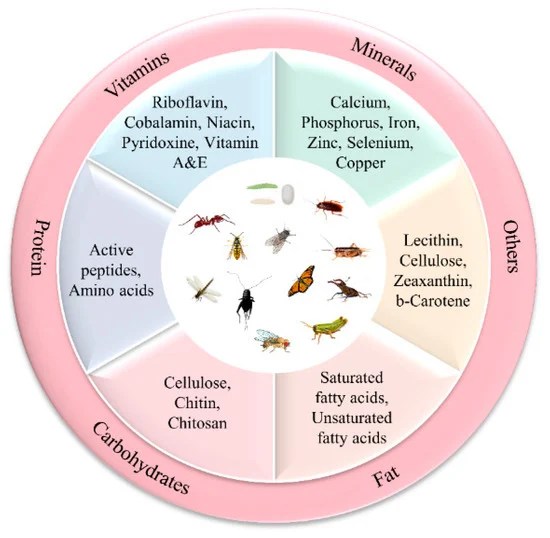
Figure 1: Nutrient Composition of Edible Insects
Environmental Impact
Crickets have a low environmental impact due to the lower methane emission generation compared to cattle, small land footprint, and high food conversion rate. Compared to cattle, crickets produce 80% less methane, a potent greenhouse gas that has more than 80 times the warming power of carbon dioxide over the first 20 years after it reaches the atmosphere. (Jansen, 2023)
For more information on the potential benefits of consuming insects (or entomophagy), including a recipe for “Cricket Leather,” read the article I wrote titled, “Consuming Insects Can Contribute to a Sustainable Planet” (McCullum-Gomez, 2018) at the link below:
Consuming Insects Can Contribute to a Sustainable Planet
Overcoming Barriers to Consuming Edible Insects
As reported in a recent review published in the journal Nutrition Reviews (2024),
“Although the use of edible insects has been accepted in some areas of the world, entomophagy is not preferred in some countries due to sociocultural conditions, health concerns, neophobia, and entomophobia. Many people do not accept the direct consumption of raw insects, but insects can be transformed into more preferred forms by using different cooking techniques. Some ground edible insects are satisfactory in terms of nutritional value and have a reasonable level of acceptability when added to products such as bread, tortilla, and pasta in varying percentages. The world market value of edible insects was estimated to be US$3.2 million in 2021 and US$17.6 billion in 2032.” (Turan et al., 2024)
Food Security
Consumption of edible insects can provide a sustainable alternative for food security in Latin America (Abril et al., 2022). “For instance, the use of insects as raw material, because they have a high protein content comparable to animal-based foods. Specifically, ants and crickets can contain between 9 and 77% protein of dry weight, while beef contains between 25 and 28%.” Furthermore, “there is evidence that insects produce fewer greenhouse gases during their production, for example, pigs produce between 10 and 100 times more greenhouse gases per kg of weight.” (Abril et al., 2022) The United States, Mexico, Chile, Peru, and Argentina have begun to develop and consume these products; thus, promoting different and new ventures. Finally, large-scale production of insect-based food products could help solve or even prevent the looming food problem and contribute to the sustainable development goals set by the United Nations. (Abril et al., 2022)
Matandirotya et al. (2022) reported that in Africa, “In addition, being a source of nutritious food, edible insects can also be a source of establishing sustainable livelihoods, as well as being able to be commercialized, thus further creating employment opportunities and economic growth. Some of the notable edible insects in abundance on the continent include termites, ants, crickets and caterpillars. Our study recommends that Africa should commercialize edible insect production, in addition to preservation processing that leads to the eradication of perennial food insecurity and malnutrition and improves environmental health, as well as developing sustainable food systems. We also further recommend the establishment of food safety guidelines on edible insects as most African countries do not have such a plan in place currently.” (Matandirotya et al., 2022)
In Kenya, Coppoolse et al. (2023) found, “that Zn [Zinc] would cease to be a problem nutrient when including house crickets to children’s diets (population reference intake coverage for Zn increased from 89 % to 121 % in the best-case scenario). FBR [food-based dietary recommendations] based on both scenarios could ensure nutrient adequacy for all nutrients except for fat, but energy percentage (E%) for fat was higher when house crickets were included in the diet (23 E% v. 19 E%). This maneuver, combined with realistic changes in dietary practices, could therefore improve dietary Zn content and ensure adequacy for twelve nutrients for Kenyan children. Further research is needed to render these theoretical recommendations, practical.” (Coppoolse et al., 2023)
The Insects to Feed the World Conference will take place in Singapore from June 19-22, 2024.
This international event will “bring together researchers and industry professionals from around the world to exchange ideas and the latest advancements in the field of insects for feed and food.”

Learn more about the Insects to Feed the World Conference at:
https://www.ifw2024.com/event/82c4ce20-37fe-4f5d-b0c1-a7440224102f/summary
References
Omuse, E.R., Tonnang, H.E.Z., Yusuf, A.A. et al. The global atlas of edible insects: analysis of diversity and commonality contributing to food systems and sustainability. Sci Rep. 2024; 14:5045. https://doi.org/10.1038/s41598-024-55603-7
Jansen C. Crickets can help us curb global warming and enhance food security. Here’s how. Earth Org. November 20, 2023. Available at: https://earth.org/crickets-can-help-us-curb-global-warming-and-enhance-food-security-heres-how/
Zhou, Y.; Wang, D.; Zhou, S.; Duan, H.; Guo, J.; Yan, W. Nutritional composition, health benefits, and application value of edible insects: A review. Foods. 2022;11:3961: https://doi.org/10.3390/foods11243961
McCullum-Gomez C. Consuming insects can contribute to a sustainable planet. Hunger and Environmental Nutrition (HEN) Post. Summer 2018. Available at:
Turan Y, Berber D, Sesal NC. Could insects be an alternative food source? A comprehensive review. Nutrition Reviews. 2024; nuae019: https://doi.org/10.1093/nutrit/nuae019
Abril S, Pinzón M, Hernández-Carrión M and Sánchez-Camargo AdP. Edible insects in Latin America: A sustainable alternative for our food security. Front. Nutr. 2022;9:904812. doi: 10.3389/fnut.2022.904812
Matandirotya NR, Filho WL, Mahed G, Maseko B, Murandu CV. Edible insects consumption in Africa towards environmental health and sustainable food systems: A bibliometric study. Int J Environ Res Public Health. 2022. 11;19(22): 14823. doi: 10.3390/ijerph192214823.
Coppoolse H, Borgonjen-van den Berg KJ, Chopera P, Hummel M, Grimble G, Brouwer ID, Melse-Boonstra A. The potential contribution of house crickets to the dietary zinc content and nutrient adequacy in young Kenyan children: a linear programming analysis using Optifood. Br J Nutr. 2023;129(3):478-490. doi: 10.1017/S0007114522000915.
 Sustainable RDN