Cigarette style graphic warning labels could reduce people’s meat consumption, according to new research published in the journal Appetite. (Hughes et al., 2023) The new study suggests the use of warning labels on meat options could improve the public’s health and reduce the UK’s carbon footprint. The independent Climate Change Committee, which advises the UK government, recommends a 20 percent reduction in meat and dairy consumption by 2030. (Durham University, 2023)
In the newly published study, a research team from Durham University tested a range of warning labels including those which warn people of the damage to climate, health, and risk of pandemics. A representative sample of 1,001 meat-eating adults in the UK were split into four groups which were shown pictures of hot meals you might buy in a canteen which contained either a health warning label, climate warning label, pandemic warning label, or no label. (Hughes et al., 2023; Durham University, 2023)
They were asked to make 20 separate decisions on different meal choices and the team also asked how anxiety provoking and believable they found the labels. Future intentions to buy and eat the meal options, as well as how appealing the meals appeared, were measured. Participants also indicated how supportive they would be of the different labels if they were implemented as policy. An example set of meals could be a meat pasta bake, fish pasta bake, vegetarian pasta bake, and a vegan pasta bake. (Hughes et al., 2023; Durham University, 2023)

The researchers found that all labels were effective at discouraging people from choosing meals with meat. All warning labels, which showed a graphic image alongside text, reduced meat meal selections by seven to 10 percent. However, out of all the labels presented, participants were most in favor of the climate warning labels which they also found the most credible. (Hughes et al., 2023)
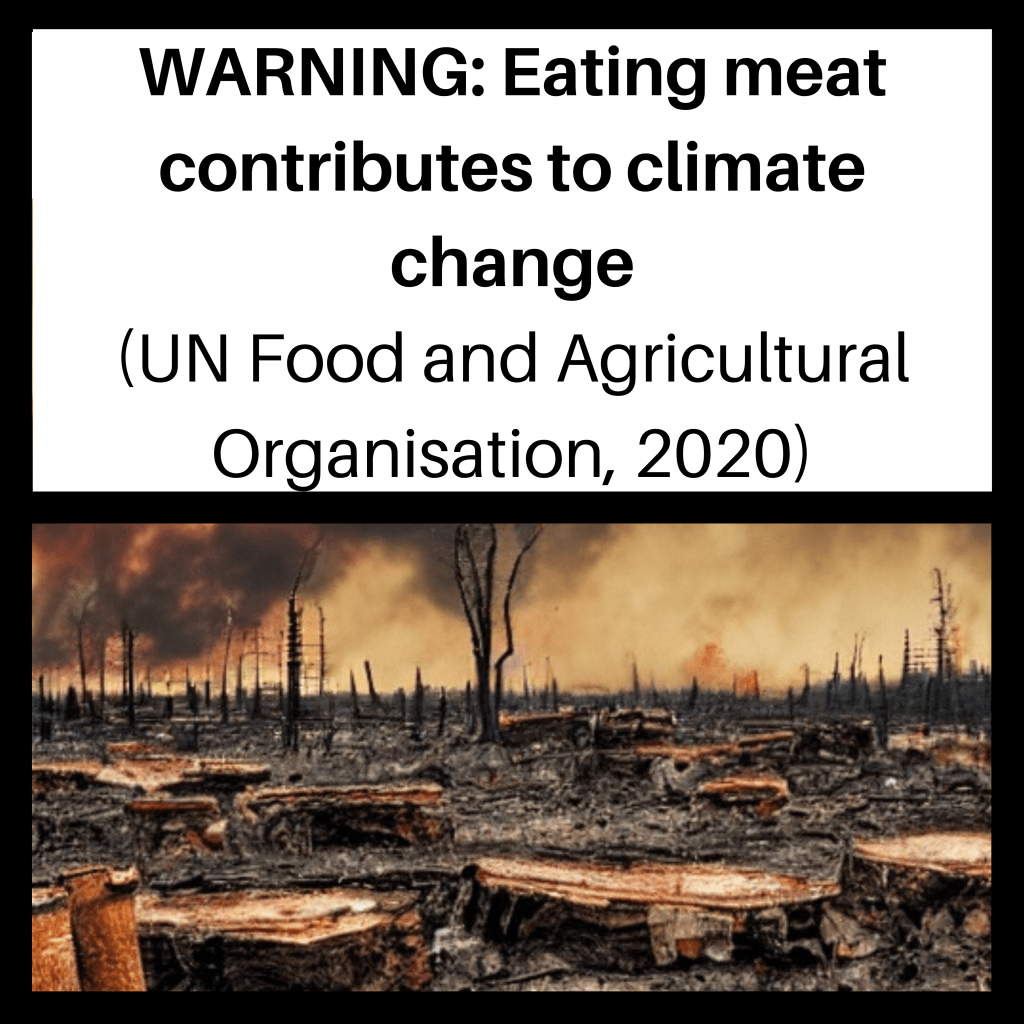
Jack Hughes carried out the research with his supervisors as part of his PhD research at the Department of Psychology at Durham University. He said: “Reaching net zero is a priority for the nation and the planet. As warning labels have already been shown to reduce smoking as well as drinking of sugary drinks and alcohol, using a warning label on meat-containing products could help us achieve this if introduced as national policy.” (Durham University, 2023)
References
Hughes P, Weick, M, Vasiljevic M. Impact of pictorial warning labels on meat meal selection: A randomised experimental study with UK meat consumers. Appetite. 2023; 190:107026. https://doi.org/10.1016/j.appet.2023.107026
Press Release. Durham University. Cigarette style warning labels could reduce people’s meat consumption. November 1, 2023. Available at: https://www.eurekalert.org/news-releases/1006291
Mandel K. What happens when diners are shown climate warning labels on meat dishes. Time Magazine. November 1, 2023. Available at: https://time.com/6330520/climate-warning-labels-on-meat-study/
 Sustainable RDN