A new review paper published in the journal Innovations in Environmental Sustainability outlines how agroecology can be used to tackle climatic, food, and ecosystem crises. “Agroecology has been proposed as a transformative approach to climate change mitigation and adaptation that reduces climate risk while supporting long-term productivity and resilience of food systems by applying ecological and humanistic principles.” It is a holistic systems approach to producing food, which incorporates social, economic, and political dimensions.
“Agroecological practices include landscape and farm diversification, intercropping, crop and pasture rotation, adding organic amendments, cover crops, and minimizing or avoiding synthetic inputs. Social dimensions of agroecology include co-creation of knowledge with farmers, participatory processes, nonwage labor relations, collective property, and management of resources, and addressing social inequities.”
Agroecology, is aligned with organic agriculture, ecological intensification, and diversified farming approaches, in emphasizing ecological processes to food production to support biodiversity, ecosystems, human health, and well-being for long-term resilience of food systems. And while organic agriculture includes many agroecological practices, agroecology includes more transformative approaches to the broader food system, including attention to political, sociocultural dimensions, markets and dietary change. See Figure 1. (Bezner Kerr et al., 2023)
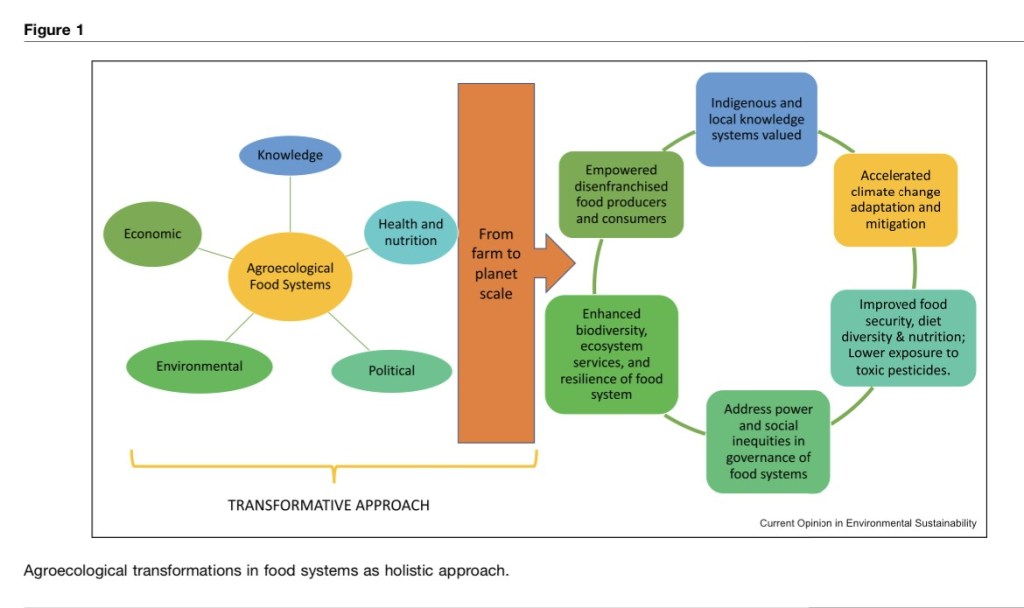
Figure 1: Agroecolocial transformations in food systems as a holistic approach
Examples that show the synergistic results of agroecology in terms of climate adaptation and mitigation include agroforestry, organic matter management, integration of livestock and crops, and mangrove silvo-aquaculture systems. Agroforestry provides economic and environmental benefits such as diverse products and foods (e.g. wood and fruit), ecosystem services, livelihoods, household well- being, shelter for livestock and crops, and opportunities to mitigate climate change by sequestering carbon. Furthermore, global meta-analyses demonstrate that agroforestry typically stores more soil carbon than conventional agriculture, and reduces the spread of fire. (Bezner Kerr et al., 2023)
CorpoCampo: A forest-friendly açaí model that offers local communities and farmers sustainable livelihoods in Colombia.

The family-owned food company CorpoCampo (Amapuri) in Colombia specializes in the production and distribution of açaí berries* and palm hearts, with products derived from palm trees using agroforestry practices in the Colombian Amazon. The Colombian Amazon region has long been affected by Colombia’s internal conflict, leading to widespread poverty, violence, and illegal coca crop production. The goal of company founder Edgar Montenegro is to improve peoples’ lives by providing a legal and reliable source of income. He therefore only employs vulnerable Afro-Colombian and indigenous communities in areas affected by violence and poverty.
Açaí is a native species of the Amazon region. Corpocampo plants organic crops deriving from palm trees not as mono cropped systems but in agroforestry systems with Amazonian products. By establishing agroforestry systems with native species, Corpocampo contributes to the reforestation of the Amazon forest. Açaí and palm hearts, Corpocampo’s two staple products, only grow in the Amazon and Pacific regions.
To for more information on CorpoCampo (Amapuri), see: https://www.amapuri.com/

CorpoCampo NGO
After winning the 2018 Oslo Business for Peace Award (CorpoCampo CEO Edgar Montenegro) and joining the UN Development Programme’s Business Call to Action, CorpoCampo created a non-governmental sub-unit, sponsored by international donors: CorpoCampo NGO. In 2019, Corpocampo (NGO) was founded by local farmers that developed a successful business model around palm heart and açaí production. Corpocampo covers 72% of the domestic açaí market and 73% of Colombia’s açaí exports – reaching more than four countries.
Learn more about CorpoCampo CEO Edgar Montenegro at:
https://www.businesscalltoaction.org/member/corpocampo
One of the main socio-environmental problems facing these areas is the loss of forest cover resulting from lack of sustainable alternatives. The main factors that promote deforestation are extensive cattle ranching (including illicit cattle ranching), illegal coca plantations, and illegal timber exploitation.
Through the implementation of rural development programs, CorpoCampo seeks to generate important social, environmental, and economic impacts. By promoting sustainable practices and endemic products, Corpocampo seeks to offer alternatives to improve the quality of life of the inhabitants of the Amazon and empower them to protect the environment.
Through the value chain of açaí and other Amazonian fruits, the protection of forests and the recovery of soils are promoted, through the establishment of agroforestry crops. Thus, CorpoCampo contributes to the conservation and construction of territorial peace. Here are examples of Corpo Campo’s current projects:
- More than 2,000 hectares under Forest Management Plans, to guarantee a sustainable use of the açaí.
- Establishment of agroforestry agricultural systems with 800 small farmers
CorpoCampo implements agroecological training that can help farmers manage the crop with techniques that are friendly to the environment and their budgets. Thirty-four percent of their current acai producers are women. Their long-term goal is to achieve a 60% participation rate by women. Currently, 4 indigenous communities are participating their programs.
By establishing sustainable agroforestry models, based on native fruit trees, Corpo Campo restores degraded soils in deforested areas. In this way, CorpoCampo offers local communities an economic alternative to improve their income, while helping to mitigate erosion processes and capture more C02.
Açaí berries*
Açaí is a type of fruit whose scientific name is Euterpe Oleracea. Açaí berries stand out for their antioxidant content. They contain pigments called anthocyanins that act as antioxidants.
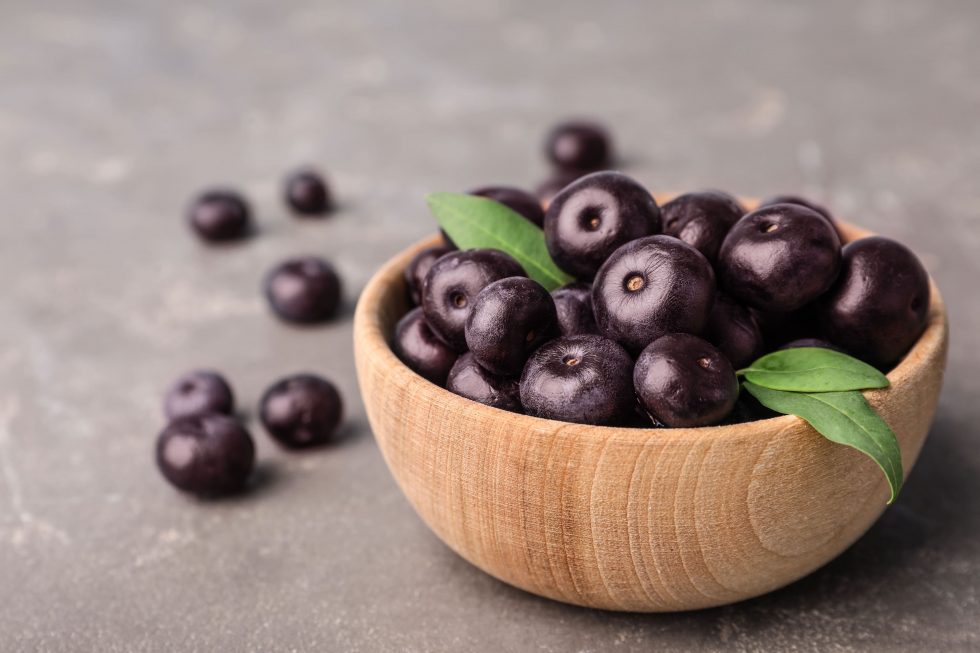
Here’s an easy recipe for an Açaí Bowl:
Ingredients:
- 8-ounce packet unsweetened frozen açaí puree
- 1 medium banana
- ½ cup blueberries
- 1 tablespoon honey
- 3 tablespoons granola
- 1 tablespoon unsweetened coconut flakes (optional)
- ½ cup nonfat Greek yogurt
Instructions:
- Pour water on the frozen açaí puree for a few seconds to break it up.
- Mix in a blender: the açaí berry puree, half the banana, ¼ cup of the blueberries, the yogurt, and the honey.
- Stop the blender and stir it from time to time until you have the thickness you want.
- Pour into a bowl.
- Use the rest of the fruit, the granola, and the coconut as toppings for your bowl.
Source: WebMD, 2023
For more information on the potential benefits of açaí berries and açaí berry juice, see the following recent articles:
What are the Health Benefits of Acai Berries? (April 2023)
https://www.medicalnewstoday.com/articles/305576
Acai Berries and Acai Berry Juice – What Are the Health Benefits? (July 2023)
https://www.webmd.com/diet/acai-berries-and-acai-berry-juice-what-are-the-health-benefits
For more information on the benefits of anthocyanins, see the review article titled, “The Therapeutic Potential of Anthocyanins: Current Approaches Based on Their Molecular Mechanism of Action (Frontiers in Pharmacology, 2020)
https://www.frontiersin.org/articles/10.3389/fphar.2020.01300/full
Reference
Bezner Kerr, R, Postigo, JC, Smith, P, et al. Agroecology as a transformative approach to tackle climatic, food, and ecosystemic crises. Current Opinion in Environmental Sustainability. 2023; 62:101275.
 Sustainable RDN