If more than half of the currently overconsuming population starts eating a planet-friendly, healthy diet, including consuming less red meat, this could reduce emissions from global diets by as much as 17%, according to a new study published in Nature Climate Change.
More specifically, the authors of the study reported that:
“On the basis of detailed household-expenditure data, we evaluate the unequal distribution of dietary emissions from 140 food products in 139 countries or areas and further model changes in emissions of global diet shifts. Within countries, consumer groups with higher expenditures generally cause more dietary emissions due to higher red meat and dairy intake. Such inequality is more pronounced in low-income countries.
The present global annual dietary emissions would fall by 17% with the worldwide adoption of the EAT-Lancet planetary health diet, primarily attributed to shifts from red meat to legumes and nuts as principal protein sources. More than half (56.9%) of the global population, which is presently overconsuming, would save 32.4% of global emissions through diet shifts, offsetting the 15.4% increase in global emissions from presently underconsuming populations moving towards healthier diets.” (Li et al., 2024)

“Earlier this year, as many as 200 climate scientists from 48 countries expressed their views on this topic through a Harvard Law School survey, and 85% agreed that shifts to healthier diets are essential to limit global warming.” (Thambi, 2024)
“Healthy dietary choices can help you keep negative health conditions such as obesity and diabetes at bay but also help reduce the greenhouse gases causing our planet to warm up. Our food system contributes to about a third of global emissions, according to a study in Nature Food. So, our choices and decisions about what sits on our plates are essential for both our bodies and the planet.” (Thambi, 2024)

“Based on the scientific literature highlighting the importance of diet shifts toward healthy diets, there are two simple things you can start acting on today to help reduce the adverse impact of your diet on climate.” (Thambi, 2024) These include:
1. Reduce Overconsumption of Animal-based Proteins and Starchy Vegetables
Overconsumption is particularly high in the case of certain commodities, such as animal-based proteins and starchy food. For instance, North America— including the United States—currently consumes six times more beef and roughly two times more dairy, chicken, eggs and potatoes than needed for a healthy diet. The findings are based on a first-of-its-kind assessment by the EAT-Lancet report, published a few years ago by 37 world-leading health and climate scientists from 16 countries, who defined targets for healthy diets and sustainable food production.
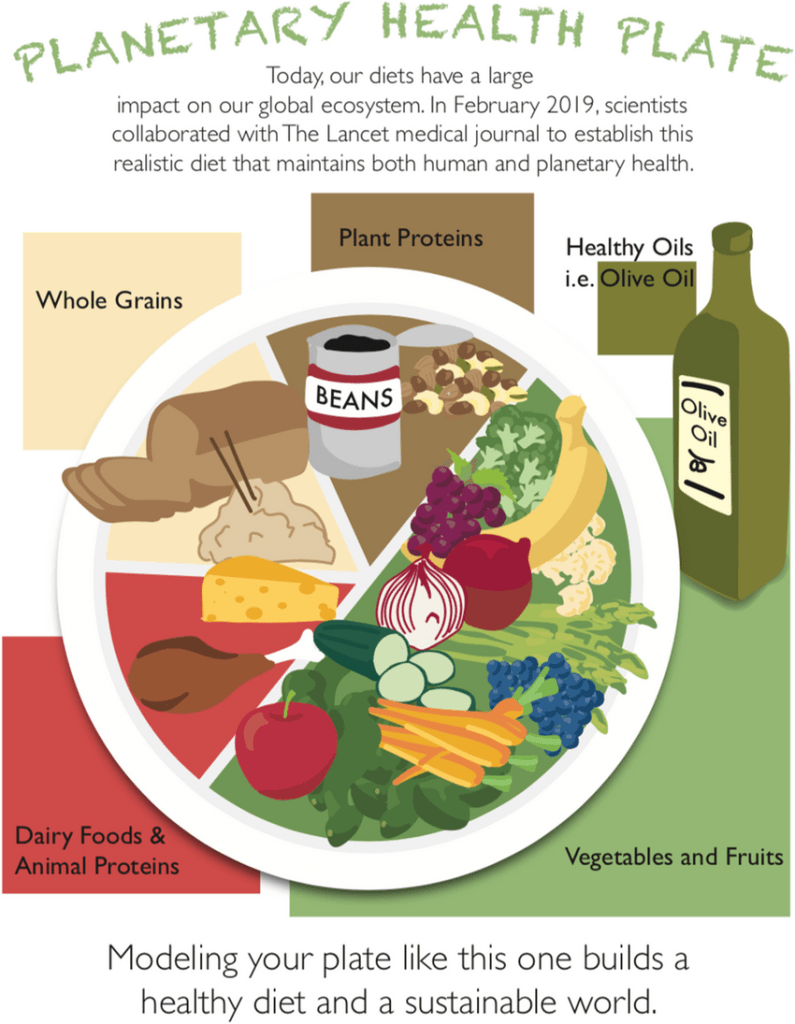
“High consumption is more prevalent among the people in the higher expenditure brackets of countries, particularly for animal-based products. The new paper in Nature Climate Change shows that the greenhouse gas footprint of people in the higher expenditure groups of the US, Canada and Australia is up to three to seven times higher than the global average, much of which is from animal-based proteins. It also shows that if more than half of the people who are currently overconsuming start eating healthy diets, they could free up space for emissions of diets in under-consuming poorer countries—saving 32.4% of global emissions, offsetting the 15.4% increase in global emissions from presently under consuming countries.” (Thambi, 2024)
Lower-income groups in Sub-Saharan African countries underconsume some products, leading to nutrient deficiency of essential proteins and vitamins. It is important to note that this only applies to poorer income groups in those countries, as the above study shows that even in these countries, the high-expenditure groups could still be overconsuming and, therefore, have a higher emission footprint for animal-based foods than the global average.” (Thambi, 2024)
“Overconsumption of animal-based proteins is often driven by the misconception that any amount of protein benefits the body. Studies on clinical medicine led by researchers at the University of Cambridge found that high protein intake has adverse effects, such as raising blood insulin levels. When protein intake exceeds what the body requires for general repair functions, excess protein is converted by the liver into fat, according to recent research on protein and nutrition by the FAIRR Initiative, a London-based organization that works with global investors to define the material sustainability issues linked to intensive animal agriculture through research, tools, and engagement with food companies. This response is similar to the body’s response to excess consumption of things such as starch and sugar, the research report added.” (Thambi, 2024)
2. Make Flexitarian Diets Part Of Your Daily Meal Routine
A flexitarian diet—primarily plant-based but can optionally include modest amounts of fish, meat, and dairy foods—benefits your health and global efforts to cut warming. Evidence supports the benefits of a flexitarian diet for improving metabolic health and blood pressure, reducing the risk of Type 2 diabetes, and offsetting the adverse impacts of high animal-based diets on global emissions. For instance, research in Nature Food indicates that animal-based products contribute twice as much to local greenhouse gas emissions as plant-based food.

A flexitarian diet can also reduce the effort needed in other economic sectors to cut emissions to meet the 1.5-degree goal and limit global warming, according to a study in Science led by researchers from the Potsdam Institute of Climate Impact Research in Germany earlier this year.
So, next time you are at the supermarket, thinking about what to cook for your meal, remember that the small choices you make have significant impacts; what you buy matters for your health and the planet’s health. (Thambi, 2024)
References
Li, Y., He, P., Shan, Y. et al. Reducing climate change impacts from the global food system through diet shifts. Nature Climate Change. 2024;14: 943–953.
Thambi S. 2 simple changes to your diet can help your body and the planet. Forbes. August 28, 2024. Available at: https://www.forbes.com/sites/simithambi/2024/08/28/2-simple-changes-to-your-diet-can-help-your-body-and-the-planet/
 Sustainable RDN