Using less plastic and purchasing and consuming fewer pre-packaged highly processed foods should be on everyone’s sustainability list for 2024. Why is this the case?
A new study by researchers at the University of Toronto and Ocean Conservancy published in the journal Environmental Pollution (2024) evaluated microplastics in different types of protein-containing foods in the food supply. Obviously, there are no easy answers and consuming less overall must be part of the bigger picture. However, there are some easy steps that everyone can take to reduce their plastic use and food packaging in general. Learn more below.
Not even plant-based food is safe from microplastic contamination
“New research finds that nearly 90% of proteins — yes, even vegan alternatives — tested by researchers contain microplastics, which have been linked to negative health consequences.
Sixteen types of protein sources — including chicken, beef, seafood, pork, tofu and three plant-based alternatives — were analyzed for microplastics in a study published Monday in the journal Environmental Pollution.
The samples were purchased in April 2022 from two supermarkets and one grocer in the Portland, Oregon, area — according to the product packaging, they were produced in the US.
The researchers, from Ocean Conservancy and the University of Toronto, found that 88% of the samples contained plastic particles, implying that humans are likely consuming microplastics no matter their diet.
“As ocean scientists, my co-authors and I are deeply concerned about the growing plastics crisis in the world’s ocean,” said study co-author Dr. George Leonard, Ocean Conservancy’s chief scientist. “But our study shows that plastics in our food goes well beyond fish and shellfish to a wide variety of other protein sources, as well.”
Ocean Conservancy’s report — which found that 44% of the microplastics discovered were fibers and 30% were fragments — adds to the growing research on microplastic presence in our diets, suggesting the need for further studies to determine their origins.
Ocean Conservancy researchers noted that the way the foods are processed could be to blame — they found that more-processed proteins contain higher levels of microplastics than their less-processed counterparts.”
Microplastics are everywhere: Is it possible to reduce our exposure?
“[Another] new study has found that bottled water can contain up to 100 times more tiny pieces of plastic than was previously estimated. The average litre of bottled water contains almost a quarter of a million nanoplastic fragments, according to a study by researchers at Columbia and Rutgers universities in the US. The researchers analysed five samples of three common bottled water brands and found nanoplastic levels ranging from 110,000 to 400,000 per litre, with an average of around 240,000.”
But is it really possible to avoid microplastics? Here’s what we know about where they are found.
Microplastics are in your food
Plastics aren’t just ubiquitous in water. They are also spread widely on agricultural land and can even end up in the food we eat. According to a 2022 analysis, sewage sludge, which is used as crop fertilizer, has contaminated almost 20 million acres (80,937sq km) of US farmland. This sludge contains microplastics and PFAS (per- and polyfluoroalkyl substances), also known as “forever chemicals”. A study from Cardiff University in the UK found that 86 trillion to 710 trillion microplastic particles contaminate European farmland each year.
What about switching to glass bottles?
Swapping out plastic packaging could potentially help to reduce exposure – tap water has lower levels of microplastics than water from plastic bottles. But it would also have environmental repercussions. While glass bottles have a high recycling rate, they also have a higher environmental footprint than plastic and other packaging used for liquids such as drinks cartons and aluminium cans. This is because the mining of silica, which glass is made of, can cause significant environmental damage, including land deterioration and biodiversity loss. Even with these non-plastic receptacles, it’s hard to escape microplastics entirely. Studies led by Sherri Mason at Pennsylvania State University have found they are not only present in tap water, where most of the plastic contamination comes from clothing fibres, but also sea salt and even beer. Read more about whether glass or plastic is better for the environment.
Can anything be done to reduce microplastics?
Fortunately, there is some hope. Researchers are developing a number of approaches to help get rid of the plastic pollution in our environment. One approach has been to turn to fungi and bacteria that feed on plastic, breaking it down in the process. A species of beetle larvae that can devour polystyrene has also offered another potential solution. Others are looking at using water filtration techniques or chemical treatments that can remove microplastics.
Taking Action: Reducing Plastic Use and Food Packaging
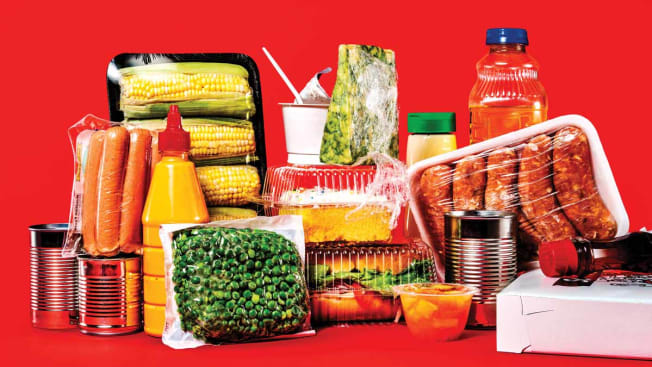
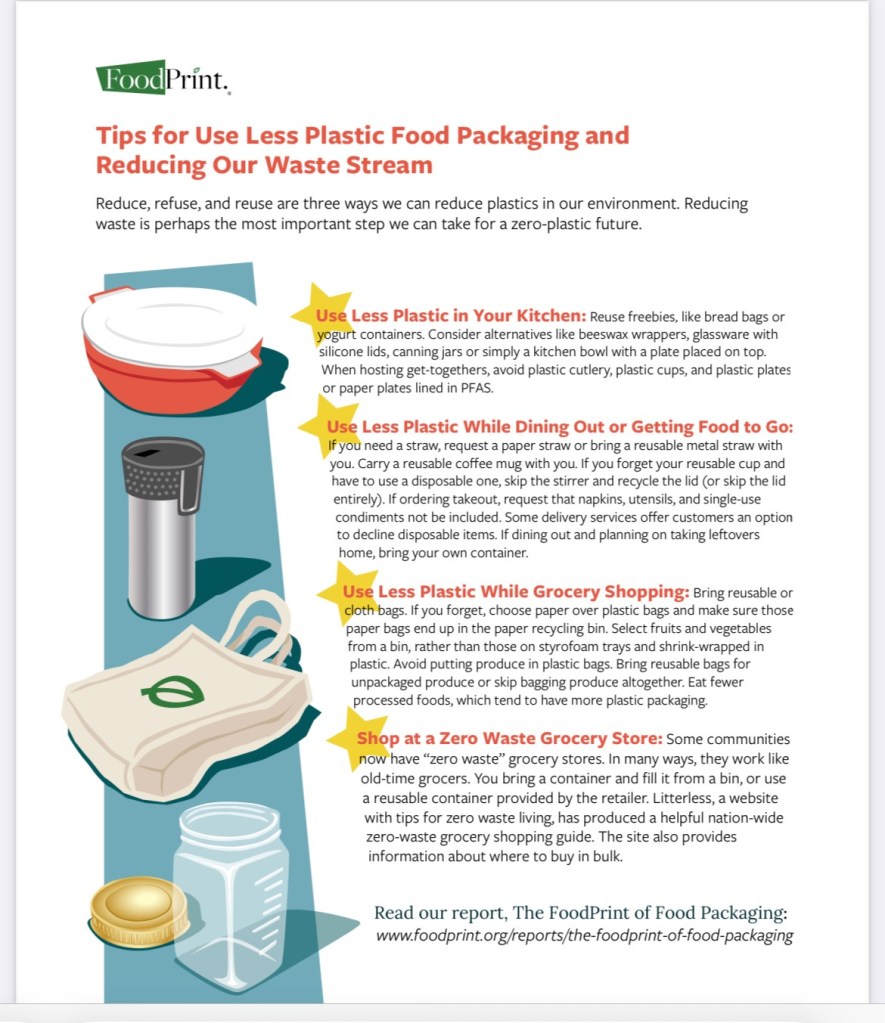
Interested in learning more about how to reduce your plastic use and packaging use, overall. See the helpful tips below from Consumer Reports (2024) and FoodPrint (2023):
The Plastic Chemicals Hiding in Your Food. Consumer Reports. January 4, 2024
Consumer Reports tested popular fast foods and supermarket staples for bisphenols and phthalates, which can be harmful to your health. Here’s what they found— with practical tips on how to stay safe.
Limit fast food, use less plastic in the kitchen (e.g., plastic containers), choose fresh foods over ultra-processed foods including pre-made packaged foods.
The FoodPrint of Food Packaging. A FoodPrint Report (2023)

References
Milne MH, De Frond H, Rochman CM et al. Exposure of U.S. adults to microplastics from commonly-consumed proteins, Environmental Pollution. 2024;343: 123233. https://doi.org/10.1016/j.envpol.2023.123233.
Kato B. Microplastics found in nearly 90% of meat, plant-based alternatives: “There’s no escaping them.” New York Post. January 9, 2024. Available at: nypost.com
Friedman LF. The plastic chemicals hiding in your food. Consumer Reports. January 4, 2024. Available at: https://www.consumerreports.org/health/food-contaminants/the-plastic-chemicals-hiding-in-your-food-a7358224781/
The FoodPrint of Food Packaging. A FoodPrint Report. FoodPrint;2023. Available at: https://foodprint.org/reports/the-foodprint-of-food-packaging/?utm_source=mailchimp&utm_medium=boost&utm_campaign=plastic_cr
 Sustainable RDN